FIRST AID & MEDICAL RESPONSE TRAINING – QCTO ALIGNED

First Aid and Medical Response Training

Information Note: Non-Credit Bearing Training

Skill Programme ID:
SP-230801

NQF Level:
2

Credits:
2

Pre-requisites:
None

Duration:
2 Days

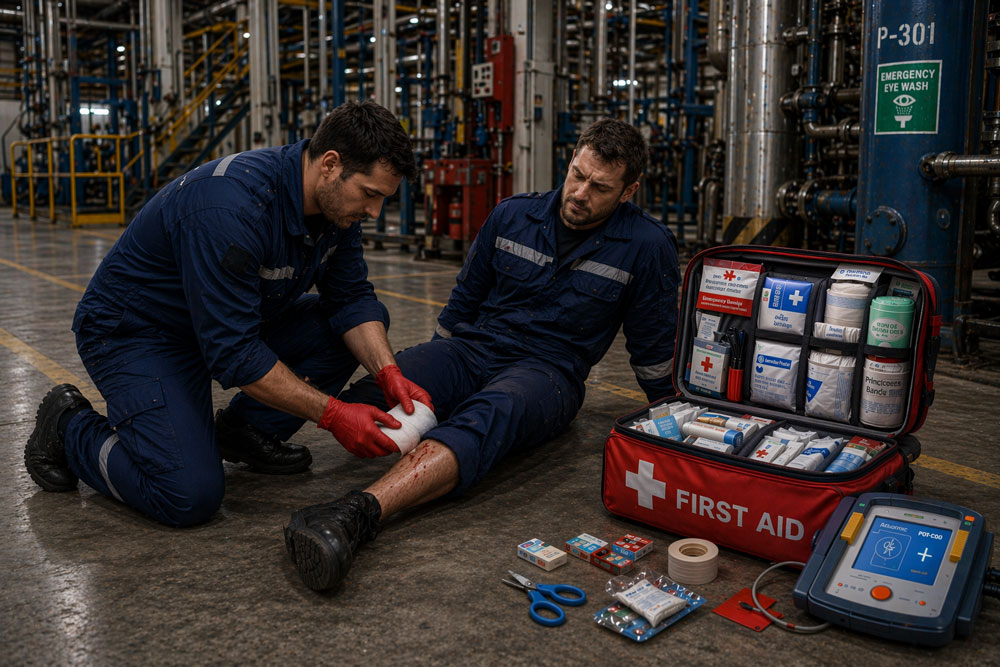
The QCTO Basic First Aid Course (SP-230801) is an entry-level occupational first aid programme designed to equip learners with the essential knowledge and practical skills required to respond to common workplace and everyday medical emergencies until professional help arrives. The course focuses on preserving life, preventing the condition from worsening, and promoting recovery through safe, effective first aid interventions. It is suitable for employees, supervisors, safety representatives, and members of the public who may be required to provide immediate assistance in an emergency.

Course content:

  • Introduction to First Aid
  • Principles of Emergency Care

  • Legal Aspects and Responsibilities of a First Aider

  • Scene Assessment and Personal Safety

  • Patient Assessment (Primary and Secondary Survey)

  • Activating Emergency Medical Services

  • Cardiopulmonary Resuscitation (CPR)

  • Use of an Automated External Defibrillator (AED)

  • Recovery Position

  • Choking Management (Adult, Child, Infant)

  • Bleeding Control and Shock Management

  • Wounds, Burns and Scalds

  • Fractures, Sprains and Soft Tissue Injuries

  • Head, Neck and Spinal Injury Awareness

  • Medical Emergencies (Heart Attack, Stroke, Seizures, Diabetes, Asthma)

  • Poisoning and Environmental Emergencies

  • Casualty Handling and Safe Movement

  • Infection Prevention and Hygiene

  • Practical Simulations and Scenario Training

  • Written and Practical Assessment


Skill Programme ID:
SP-230802

NFF Level:
3

Credits:
5

Pre-requisites:
Basic Emergency First Aid Responder

Duration:
4 Days

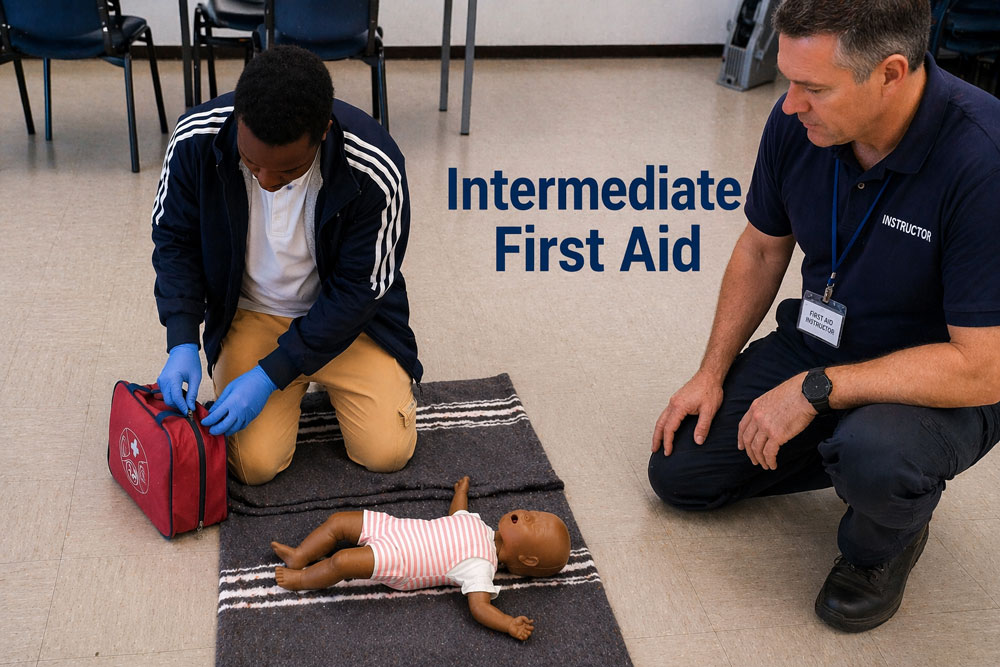
The QCTO Intermediate First Aid Course (SP-230802) builds on basic first aid competencies and provides learners with more advanced knowledge and practical skills to manage a wider range of medical emergencies in the workplace and community. The programme prepares learners to assess casualties systematically, stabilise serious conditions, and provide effective care until professional medical assistance arrives. It is suitable for appointed workplace first aiders, supervisors, safety personnel, emergency responders, and individuals requiring a higher level of emergency preparedness.

Course content:

  • Basic SCBA duration should be 1 day
  • Fire Wach duration should be 1 day
  • Portable Extinguisher Handling duration should be 5 Hours
  • Ladder Safety duration should be 1 day

Skill Programme ID:
SP -230803

NFF Level:
4

Credits:
6

Pre-requisites:
Intermediate Emergency First Aid Responder

Duration:
5 Days

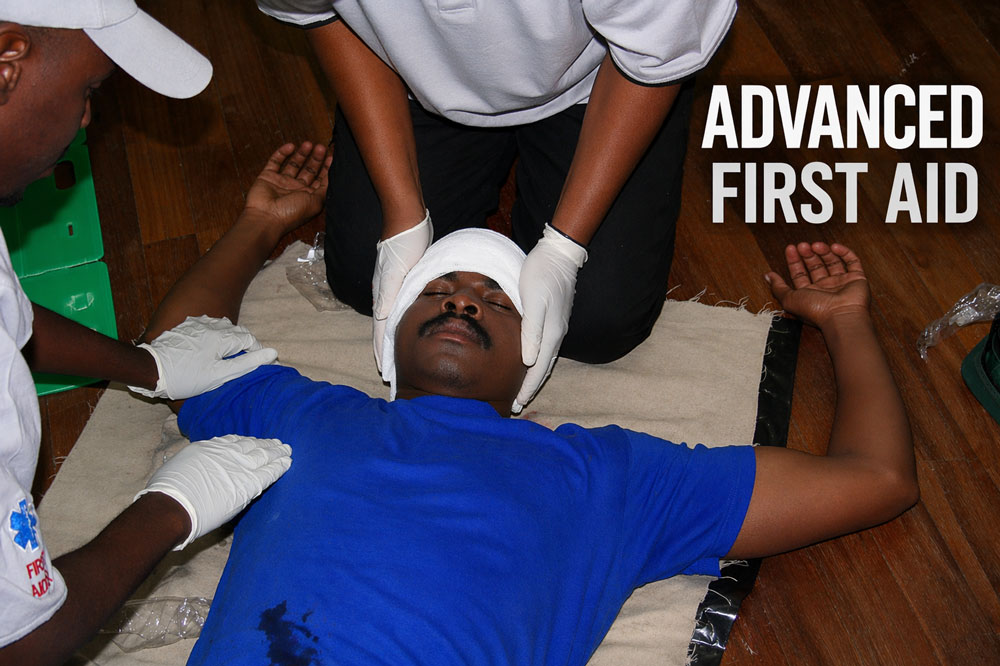
The QCTO Advanced First Aid Course (SP-230803) is a higher-level occupational first aid programme designed for learners who require advanced emergency care skills beyond basic and intermediate first aid. The course develops the ability to assess, manage, and stabilise serious injuries and medical emergencies using enhanced first aid techniques and equipment until professional medical services take over. It is ideal for senior workplace first aiders, safety officers, emergency response team members, supervisors, and personnel working in high-risk environments.

Course content:

  • Review of Basic and Intermediate First Aid Principles

  • Legal, Ethical and Occupational Responsibilities

  • Advanced Scene Management and Incident Control

  • Comprehensive Casualty Assessment

  • Airway Management Techniques

  • Breathing Emergencies and Assisted Ventilation Awareness

  • Circulatory Emergencies and Shock Management

  • Adult, Child and Infant CPR

  • Automated External Defibrillator (AED) Use

  • Oxygen Therapy and Emergency Equipment Use

  • Management of Unconscious Casualties

  • Advanced Bleeding Control and Trauma Care

  • Burns, Electrical, Chemical and Explosion Injuries

  • Fractures, Dislocations and Full Body Immobilisation

  • Head, Neck, Spine and Major Trauma Management

  • Medical Emergencies (Cardiac Events, Stroke, Seizures, Diabetes, Asthma, Allergic Reactions)

  • Anaphylaxis Awareness and Emergency Response

  • Poisoning, Overdose, Bites and Stings

  • Environmental Emergencies (Heatstroke, Hypothermia, Drowning, Confined Space Incidents)

  • Multiple Casualty Incidents and Triage

  • Patient Packaging, Lifting and Safe Transport

  • Infection Prevention and Biohazard Control

  • Emergency Communication and Handover to EMS

  • Practical Simulations and High-Risk Scenarios

  • Written Knowledge Assessment

  • Practical Competency Assessment